
Two Tracks for Anne Arundel County Public Records
Maryland keeps public records on two separate tracks. The first track is general government records. These are the files that county departments, the sheriff, and other agencies hold. They run through the Maryland Public Information Act, often shortened to PIA. The second track is court case records. Dockets, case files, and exhibits do not follow the PIA. They follow the Maryland Rules and the Judiciary's own access policy instead.
This split matters for where you send a request. A sheriff's administrative file follows the PIA, so it goes to the agency that holds it. A case docket or an order from a judge follows the court rules, so it goes to the clerk who keeps that file. Send a court request to a county agency and it will likely point you back to the court.
The PIA itself defines its core terms. Maryland Code, General Provisions § 4-101 sets out who counts as a custodian, who counts as an applicant, and what counts as a public record. That section is the right place to start before you ask a county agency for a non-court file.
How to File an Anne Arundel County Public Records Request
A clear request gets a faster answer. The PIA gives a broad right to inspect public records, set in General Provisions § 4-201, unless another law blocks the file. You do not need a lawyer. You do not need to say why you want the record. The steps below follow the normal flow for a county or agency file.
- Decide which track fits. County or agency file means PIA. Court case file means the clerk and the court rules.
- Find the right custodian. That is the office that holds the record you want.
- Write the request. Name the records as plainly as you can, and give a date range if you know one.
- Add your contact details so the office can reach you with the file or a follow-up.
- Ask about fees up front, and request a fee waiver if your request serves the public interest.
- Send the request and keep a copy with the date you sent it.
- Wait for the response within the time the law allows, then review what comes back.
Timing is set by statute. General Provisions § 4-203 spells out the response duties, including the period an agency gets to search for and review a file. A complex request can take longer, and the office should tell you if it needs more time.
What the Anne Arundel County Clerk Holds Beyond Courts
The Clerk of the Circuit Court does more than keep case dockets. The office maintains a wide set of public records that many people do not link to a courthouse. These are useful for property research, family records, and business checks. Land records are a common reason to visit the Clerk, and they are indexed online for the whole state.
The lead-in below points to the official land record portal. Land records are recorded deeds, mortgages, and related instruments, and they sit apart from court case files.
You can browse the statewide land record index at Maryland Land Records, which covers recorded instruments by county.
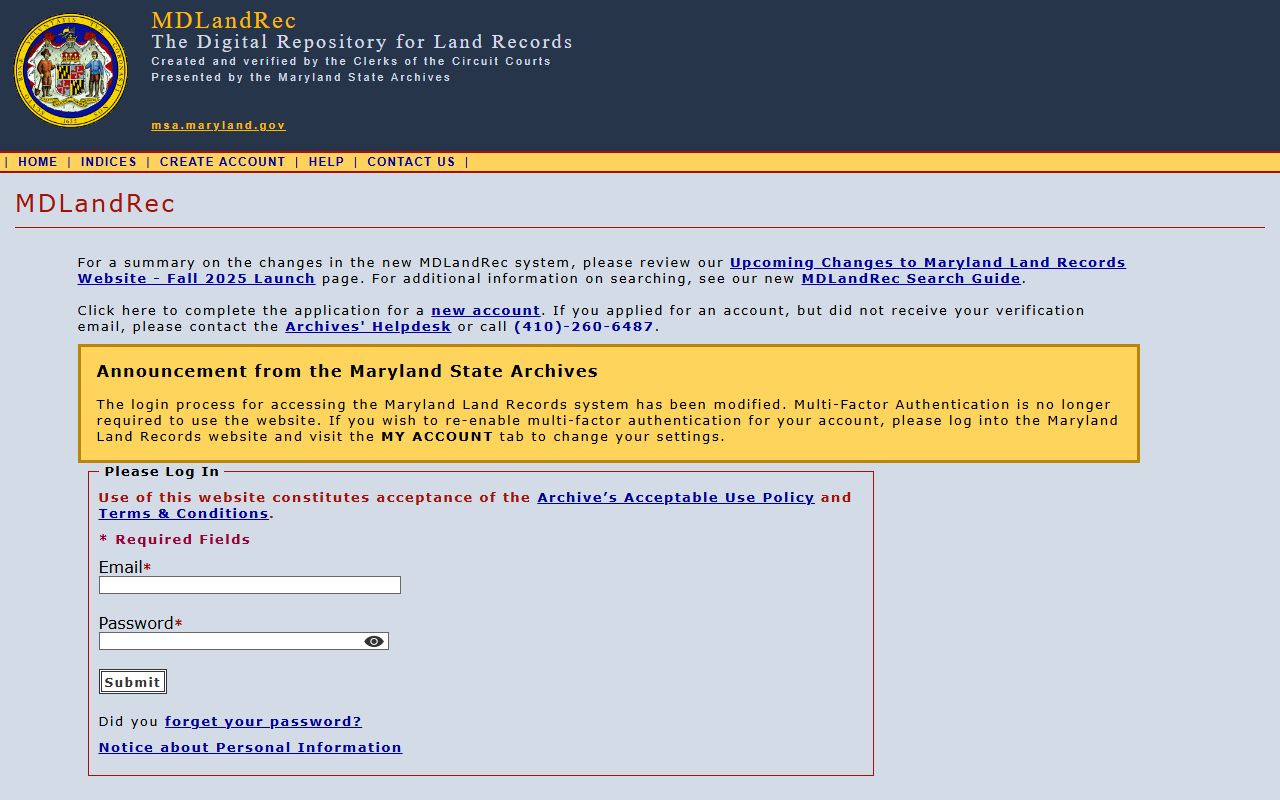
MDLandRec often asks for a free account before it shows document images, so set that up first if you plan to view scanned deeds. Beyond land records, the Clerk also keeps judgments and liens, business licenses, marriage licenses, and notary records. State property data is separate again. The state real property search at the Maryland SDAT real property portal shows assessment and ownership detail, and it is not part of the court record system.
Fees for an Anne Arundel County Public Records Request
The PIA lets an agency charge a fair fee. General Provisions § 4-206 allows reasonable charges for search time, prep time, and copies. The same section allows a fee waiver when the release serves the public interest, so it is worth asking for one. The law does not set a single statewide price, and each office sets its own amounts under the rule.
The table lists the common fee categories. The amounts are set by each agency, so confirm the current charge with the office before you commit to a request.
| Fee Category | Basis | Amount |
|---|---|---|
| Search time | Staff time to locate the records | Set by the agency; verify |
| Preparation / review | Time to review and redact under the law | Set by the agency; verify |
| Copy fee | Per page or per file for copies | Set by the agency; verify |
| Electronic / media | Files sent by email or on media | Set by the agency; verify |
| Fee waiver | Public-interest waiver under § 4-206 | Possible; request in writing |
Note: Court copy fees are separate from PIA fees and follow statewide court schedules, so check the clerk's copy page when you need a certified case document.
Anne Arundel County Public Records Request Form Fields
A PIA request does not need a fancy form. A letter or email works as long as it gives the office what it needs to act. The fields below are the typical parts of a request. Fill in as many as you can, since a vague request is the most common cause of delay.
| Field Label | Required | Notes / Format |
|---|---|---|
| Requester name | Yes | Your full name for the response |
| Contact info | Yes | Email, phone, or mailing address |
| Agency / custodian | Yes | The office that holds the record |
| Description of records | Yes | Name the files as plainly as you can |
| Date range | No | Narrows the search and cuts fees |
| Format / delivery | No | Paper, email, or pickup |
| Fee-waiver request | No | Ask if release serves the public |
For a court file, the clerk's copy request asks for slightly different items, such as the case number, the party names, and the copy type. A case number from Anne Arundel County court records on Maryland Judiciary Case Search makes that request far quicker.
When an Anne Arundel County Public Records Request Is Denied
Not every file is open. The law requires an agency to deny a request when release would break another law, a privilege, or a court order. That duty is set in General Provisions § 4-301. So a denial is not always a refusal to help. Often it is the office following a rule that protects a third party.
Personnel files draw special limits. General Provisions § 4-343 restricts personnel records, which matters when you ask for a county or sheriff employee file. The office can release some parts and hold back others, so a partial answer is common.
You have ways to push back. PIA denials can go to administrative review, and fee or access disputes can reach the Public Information Act Compliance Board or the Public Access Ombudsman. Court record disputes are different. Those go through the court or the clerk under the Maryland Rules, not the county PIA route.
Court Records Track for Anne Arundel County Public Records
Court case files sit under their own framework. The public-access rules for judicial records live in Maryland Rules Title 16, Chapter 900. That chapter sets what the public can inspect and what a clerk must shield or redact. It is the court-side counterpart to the PIA, and it governs dockets, filings, and exhibits.
Many court records are open by default. You can look up a docket, read party names, and check a disposition through the statewide case portal. For an official paper, though, you need the clerk who holds the file. Certified copies of a divorce decree, an order, or a judgment come from the clerk, not from the online portal.
Related court searches connect here. The Clerk of the Circuit Court page covers the copy process and the office's departments. For criminal files and expungement, see the arrest records page. For decrees and family files, the marriage and divorce records page walks through the clerk request.
Records That Stay Confidential in Anne Arundel County
Some records are closed no matter which track they fall under. The PIA and the court rules both protect a set of sensitive files. A request for one of these will be denied or returned with parts blacked out.
The list below covers the common closed categories across both tracks.
- Juvenile case records, restricted by statute and open mainly to parties and the court.
- Adoption files, confidential under Maryland family law.
- Expunged or shielded records, removed or limited by court order.
- Grand jury material, protected by secrecy rules.
- Mental health commitment files, closed by health privacy rules.
- Personal identifiers, such as Social Security numbers, account numbers, dates of birth, minor names, and medical info.
- Attorney work product and privileged material.
Redaction is the usual tool here. The office releases the open part of a file and withholds the protected part. So you may get a record that has lines or pages removed rather than a flat refusal of the whole file.
Self-Help for Anne Arundel County Public Records
Free help is out there if a request stalls or a court process feels confusing. The Maryland Judiciary runs a help center for people without a lawyer. Staff can point you toward the right office, the right form, and the basic steps for a court matter.
Start with the Maryland Court Help Center for phone, chat, and in-person service on court process questions.
The next resource is a plain-language legal library that the Circuit Court itself links. The lead-in points to that site.
Plain-language legal guides live at the People's Law Library, a Maryland resource on courts, records, and common legal tasks.

These sites do not file your request for you. They help you frame it, find the form, and understand what comes next. For a PIA file, you still send the request to the agency that holds it. For a court file, you still work with the clerk under the court rules.
The PIA Behind Anne Arundel County Public Records
The PIA is the backbone of every county and agency request. It says, in plain terms, that the public can see government records unless a law closes them. The definitions in the act decide who must answer and what the file even is.
The lead-in below points to the statute that anchors the whole process.
The PIA definitions appear in the Maryland Public Information Act definitions statute, which frames every term a request relies on.
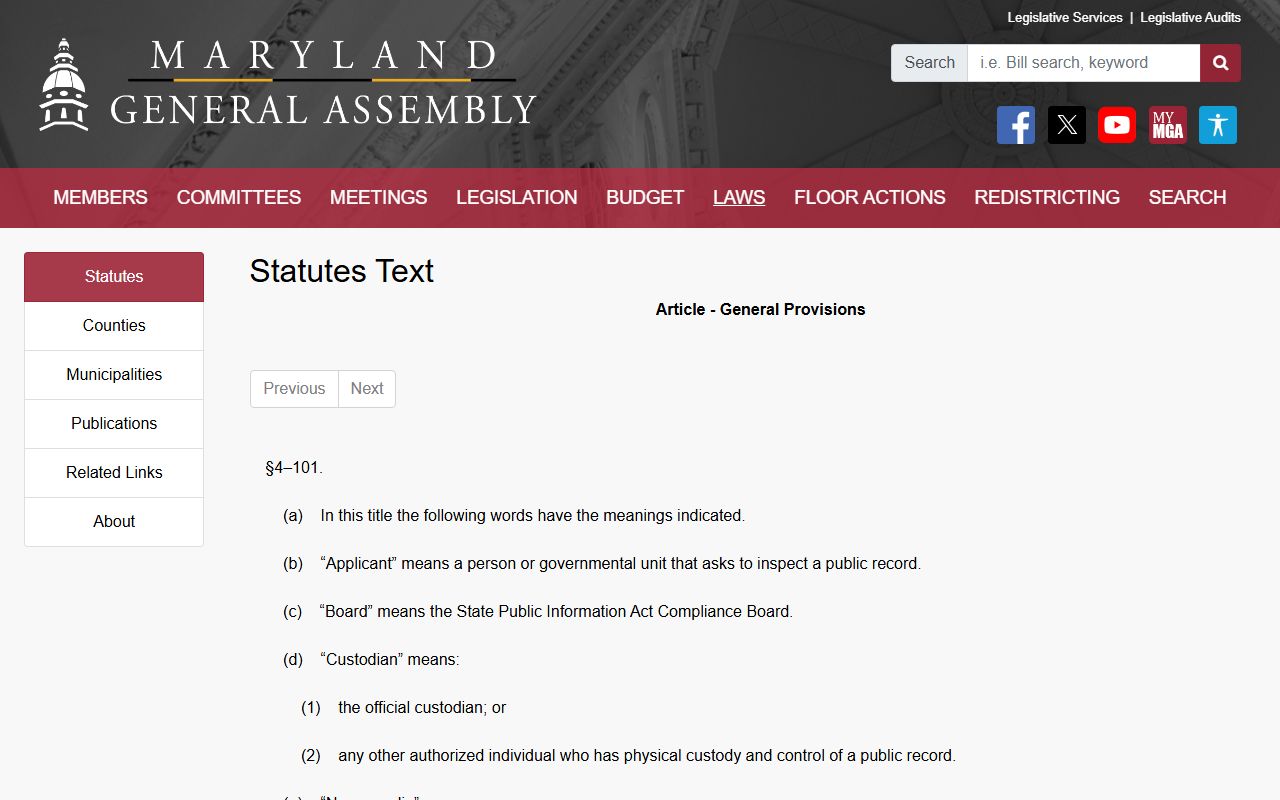
Read together, the PIA sections give you the full path. One section opens the right to inspect. Another sets the response time. A third allows fees and a waiver. A fourth requires denial when another law blocks the file. Knowing which section drives your request helps you ask the right office in the right way.